The Multi-Platform Advertising Problem
If you're running ads for a B2B SaaS company, your media mix probably looks like this:
- Google Ads: Capture high-intent search traffic
- LinkedIn: Target by job title, company size, industry
- Meta (Facebook/Instagram): Retargeting and broad awareness
- Microsoft Ads: Bing + LinkedIn audience targeting
- Reddit: Community-based targeting for niche audiences
- X (Twitter): Thought leadership and tech audiences
Each platform has its own:
- Campaign structure (Campaign → Ad Group vs. Campaign → Ad Set)
- Targeting taxonomy (keywords vs. audiences vs. interests)
- Creative specs (character limits, image sizes, video formats)
- Bidding strategies (CPC, CPM, CPA, tROAS)
- Attribution windows and conversion tracking
The Result?
A senior media buyer spends 60-70% of their time on platform mechanics—not strategy. Launching a campaign across 3 platforms takes 2-3 days of manual work. Reporting requires stitching together exports from each platform.
How AI Agents Solve Cross-Channel Advertising
An AI agent for advertising understands all the platforms and can translate your strategy into platform-specific campaigns automatically. Here's how it works:
1. Connect Your Platforms
Link your ad accounts via OAuth. The agent gets read/write access to create campaigns, pull performance data, and make optimizations. All tokens are encrypted; you can revoke access anytime.
2. Describe Your Strategy
Tell the agent what you want in natural language: "Launch a campaign for our API product targeting enterprise developers. $10K/month budget, optimize for demo requests."
3. Agent Builds Platform-Specific Campaigns
The agent translates your brief into campaigns for each platform—respecting each platform's structure, targeting options, and creative specs.
4. Dry-Run Validation
Before spending money, the agent validates campaigns via platform APIs. Catch targeting errors, budget issues, or policy violations before launch.
5. Launch & Unified Reporting
Deploy to all platforms with one approval. Get consolidated performance data across channels—no more spreadsheet stitching.
Platform-Specific Intelligence
The AI agent knows how to translate concepts across platforms:
| Concept | Google Ads | ||
|---|---|---|---|
| Campaign | Campaign | Campaign Group | Campaign |
| Ad Group | Ad Group | Campaign | Ad Group |
| Targeting | Keywords, Audiences | Job Title, Company, Industry | Subreddits, Interests |
| Bidding | Target CPA, Max Clicks | CPC, CPM | CPC, CPM, CPV |
Budget Allocation
The agent can distribute budget based on:
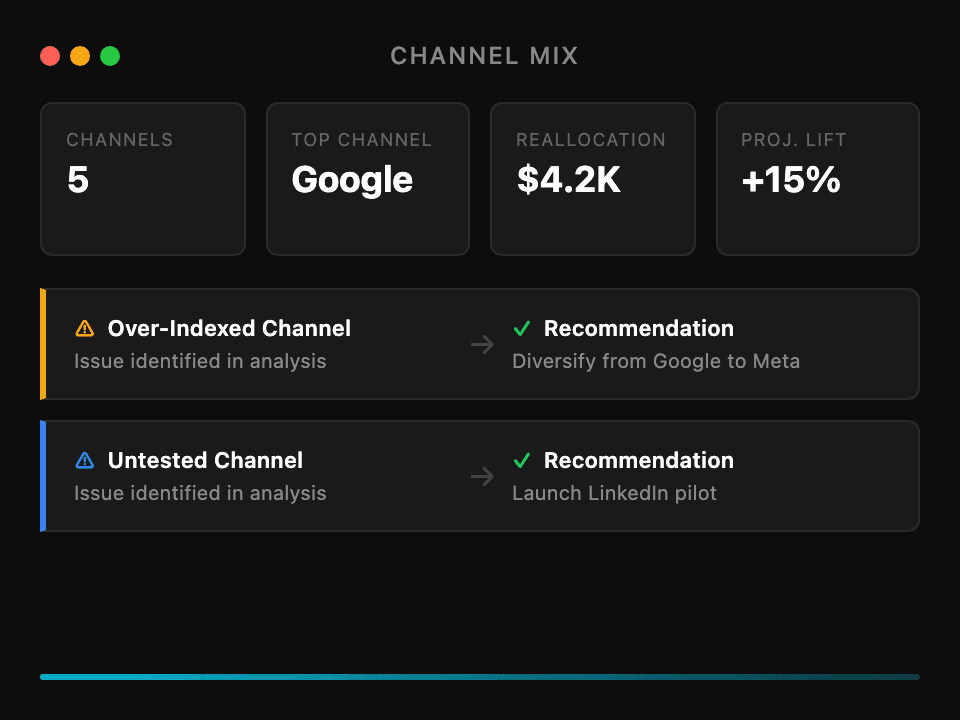
- Funnel stage: More on Google (high intent), less on awareness channels
- Historical performance: Shift to channels with better CAC
- Audience overlap: Reduce spend where audiences duplicate
- Platform minimums: Respect each platform's minimum budget requirements
Creative Adaptation
One message, adapted for each platform:
Google Search
Headlines: 30 chars each
Descriptions: 90 chars each
"Ship APIs Faster | Developer-First Platform"
Intro: 600 chars
Headline: 200 chars
"We built the API platform we wished existed..."
Title: 300 chars
Body: Native tone
"After years of fighting API infra, we built..."
Benefits of AI Agent Cross-Channel Management
vs Days to Launch
Consistent Naming
Attribution View
Speed
Launch across 3 platforms in minutes instead of days. No more copying settings between platform UIs.
Consistency
Same strategy, same messaging, same naming conventions across all platforms. Easier reporting and analysis.
Unified Attribution
See the full funnel in one place. Understand how channels work together, not just in isolation.
Reduced Errors
Dry-run validation catches mistakes before they cost money. No more "I forgot to set the daily budget cap" incidents.
When Does This Make Sense?
Good Fit
- ✓ Advertising across 3+ platforms
- ✓ Regular campaign launches (weekly/monthly)
- ✓ Small team managing multiple accounts
- ✓ Need consistent reporting across channels
- ✓ Want to test new platforms quickly
May Not Need
- ✗ Single-platform focus (just Google Ads)
- ✗ Highly custom creative per platform
- ✗ Enterprise with dedicated platform specialists
- ✗ Very low campaign volume
Getting Started
Here's how to begin with cross-channel AI campaign management:
- Audit your current platforms: Which platforms are you using? What's your spend distribution?
- Define a test campaign: Pick a product or offer to launch across 2-3 platforms.
- Connect your accounts: Link ad accounts to your AI platform via OAuth.
- Describe your strategy: Tell the agent your audience, budget, and goals.
- Review and launch: Validate the generated campaigns, then deploy.
Synter connects to Google, Meta, LinkedIn, Microsoft, Reddit, and X. Describe your strategy once; launch everywhere.